
Artificial Intelligence in Cardiac Electrophysiology: Enhancing Mapping Accuracy and Procedural Outcomes
Authors:
Affiliations:
Corresponding author
Abstract
Artificial intelligence (AI) is revolutionizing the healthcare industry through advanced data analysis, pattern recognition, and decision support, with promising applications for artificial intelligence in cardiac electrophysiology. Cardiovascular electrophysiology focuses on the diagnosis and treatment of cardiac arrhythmias through electrocardiogram interpretation, electro-anatomic mapping, and catheter ablation.
This narrative review analyzes the most recent evidence on the use of AI in the field of cardiovascular electrophysiology. The goal is to evaluate the influence of AI on arrhythmia diagnosis and various aspects of procedures in this field. These include procedural guidance, efficiency, safety, and long-term outcomes.
Selected studies were chosen qualitatively to evaluate the use of AI in procedures such as ECG/electrograms analysis and ablation targeting. They also analyze the role of AI in real-time decision support and monitoring devices. The studies in this paper include randomized controlled trials and observational analyses.
Our analysis showed that AI-assisted approaches consistently outperformed conventional counterparts. They achieved superior arrhythmia-free survival in persistent atrial fibrillation and reduced procedural times and fluoroscopy. The use of AI increased diagnostic accuracy and improved clinical decision-making. The benefits of AI in cardiovascular electrophysiology were most pronounced in cases of complex atrial fibrillation and ventricular tachycardia.
Artificial intelligence increases objectivity, precision, and reproducibility in the management of cardiac arrhythmias. That said, research mainly focuses on atrial fibrillation and ventricular tachycardia, which is why it is necessary to conduct a broader exploration of other heart rhythm disorders in order to fully elucidate its potential.
Keywords
Artificial intelligence, cardiac electrophysiology, arrhythmia detection, machine learning, ECG analysis, catheter ablation, mapping accuracy, atrial fibrillation.
Introduction
Cardiac arrhythmias are major causes of morbidity and mortality worldwide. The most common types of cardiac arrhythmias include atrial fibrillation (AF) and ventricular tachycardia (VT). Estimates show that heart rhythm abnormalities affect around 2% of the general population. That means, they are among the most prevalent heart disorders. For example, atrial fibrillation affects over 37 million people worldwide, and its prevalence keeps increasing. Ventricular arrhythmias contribute to 75% to 80% of cases of sudden cardiac death, leading to 184,000 to 450,000 deaths per year in the United States alone [1].
Traditional diagnostic and therapeutic approaches in cardiac electrophysiology rely greatly on manual interpretation of electrocardiograms (ECGs) and intracardiac electrograms (EGMs) as well as operator-dependent mapping during ablation. Not only are these methods time-consuming, but are also subject to inter-observer variability, which may pave the way to suboptimal outcomes in complicated cases.
We can consider an example. Catheter ablation is usually said to be an effective therapeutic strategy when patients have AF. However, a significant level of heterogeneity is observed with single procedures. Some patients may achieve long-term freedom from atrial arrhythmia but oftentimes it requires multiple procedures [2].
Moreover, studies also demonstrate that inter-observer variability in the evaluation of epsilon waves is high, thus emphasizing the need for caution in their assessment, particularly in patients who would not otherwise meet diagnostic criteria [3].
The rise of artificial intelligence (AI) has introduced powerful tools for improving and automating these procedures. Good examples of AI are deep learning (DL) and machine learning (ML) algorithms. The AI excels in pattern recognition in large datasets. That’s why it provides faster analysis of ECG signals and optimizes ablation procedures. It can also predict the onset or recurrence of arrhythmia. Recent developments focused primarily on the use of artificial intelligence in 3D mapping and non-invasive tools. Their goal was to improve the safety and efficacy of cardiovascular electrophysiology procedures.
This paper provides an overview of AI uses in cardiac electrophysiology. The emphasis of this paper is on the improvements in mapping accuracy and procedural outcomes. Artificial intelligence has revolutionized many industries. Healthcare sector isn’t an exception. The implementation of AI can make sure diagnoses are more accurate. Treatment recommendations may also improve. Also, it can positively influence decision-making in clinical settings. The role of artificial intelligence in cardiovascular electrophysiology, as the main subject of this paper, aims to fill in the gaps and provide much-needed information on how technological advancements can improve these approaches and thereby lead to more positive patient outcomes.
Methodology
This paper focuses on evidence presented by recent peer-reviewed studies. The goal is to provide a comprehensive view of the role that artificial intelligence plays in cardiovascular electrophysiology. The paper focuses particularly on arrhythmia diagnosis, ablation, and mapping. The approach is to integrate findings from key publications through targeted literature searches up to November 2025.
Google Scholar, PubMed and similar databases were used to search for relevant evidence. For the focus of this review, we used the following keywords: artificial intelligence and cardiac electrophysiology, machine learning arrhythmia ablation, AI mapping electrophysiology, and ECG atrial fibrillation. The search had limitations, including restricting results to publications from 2020 up to 2025.
There were specific inclusion criteria. This inclusions consist of: randomized controlled trials, retrospective case control studies, and prospective observational studies. Preclinical investigations and expert reviews were also considered for inclusion. These papers primarily explored AI applications in electrocardiogram interpretation and electrogram analysis.
Plus, they assessed the role of AI in electro-anatomic mapping, ablation guidance, procedural decision support, and integration with wearable or implantable monitoring devices. Studies were selected according to their direct relevance to AI-guided management of cardiac arrhythmias, especially atrial fibrillation and ventricular tachycardia.
Outcome focused on: diagnostic accuracy, procedural efficiency, safety profiles, acute procedural success, as well as long-term arrhythmia-free survival. There were some secondary outcomes that the review included. This involved looking at improvements in clinical decision making, prescription of anticoagulants, and the standardization of outcomes across various centers.
Exclusion criteria involved non-cardiac applications of AI and machine learning, and publications that were not available in English.
A total of 10 studies were selected for detailed analysis according to their impact and relevance. Chosen studies and articles were evaluated qualitatively. The focus was on their design, AI models used, data sources, validation approaches, and reported clinical relevance.
Results of AI in Cardiovascular Electrophysiology

Artificial intelligence has been shown to be helpful in classifying arrhythmias from 12-lead ECGs. AI integration with 3D mapping systems shows the potential to standardize EGM interpretation and target identification. In February 2025, Deisenhofer et al. published their evidence for AI-guided ablation. Specifically they focused on spatio-temporal dispersion areas, as well as pulmonary vein isolation. The use of the AI-guidance in spatio-temporal dispersion sections alongside PVI yielded better results compared to PVI alone. This result was achieved by comparing baseline to a one-year follow up.
Patients who underwent tailored cardiac ablation (with the use of AI) experienced a higher rate of freedom from any arrhythmia after 1.26 ablation procedures on average. The biggest effects of the AI-guided approach were observed in patients with longer AF duration and more advanced atrial remodeling. In these patients, the use of PVI alone (without AI) delivered only moderate effects. Deisenhofer and colleagues explained that the AI-driven software utilized in this trial identified complex, intricate clusters of electrograms and then categorized them as spatio-temporal dispersion. As a result, reproducible, reliable, and objective identification of ablation target areas was achieved [4].
Figure 1. Electroanatomic maps displayed in AI-guided dispersion (Deisenhofer et al.)
In April 2025, the Heart Rhythm Society reported on their new research. This research focused on the role that AI plays in improving procedural safety in cardiac electrophysiology.
The research showed that AI offers intelligence and real-time decision support. That way it can help mitigate risks and favorably influence clinical confidence in complex cases. Researchers who worked on this study used the DeePRISM model, which is capable of predicting AF termination sites during catheter ablation to improve procedural success. This AI model offers an automated platform for intracardiac waveform analysis during ablation, which improves safety as well as long-term results. Acute AF termination was achieved in about 40% of patients thanks to DeePRISM. Also, during the follow-up of two years, patients who underwent AI-guided ablation had better outcomes, and up to 70% were free from atrial arrhythmias [5].
Fox et al. confirmed that the use of forward-solution AI ECG mapping can reduce time to first ablation, total procedure length, and fluoroscopy without a negative influence on procedural outcomes.
In March 2024 they published their case-control study. It supports the idea that availability of information about data such as the region of arrhythmia-sustained sties can provide better focused geometry creation, mapping, and early ablation initiation.
This leads to shorter and more effective procedures as well as decreased use of radiation, which is beneficial to safety. Fox and colleagues found that the use of AI ECG mapping exhibited the predicted chamber efficacy of 95.5%, which explains why the AI model improves efficiency and reduces fluoroscopy. Moreover, an AI model in arrhythmia mapping may reduce the extent of intra-chamber, catheter-based mapping, which may allow for a faster localization of rare ectopic arrhythmias or a greater accuracy of definition of the protected isthmus in hemodynamically unstable patients with VT[6].
Figure 2. Six-month arrhythmia-free survival in study (AI-assisted) and control groups (Fox et al.)
In their January 2025 study, Bahlke et al. found that AI-guided ablation using machine learning software, called the Volta VX1, in addition to PVI in long-standing persistent AF ablation, led to high rates of long-term success regarding elimination of atrial fibrillation and atrial tachycardia (AT). Freedom from these heart rhythm disorders was 82% after 1.46 ± 0.68 procedures. Bahlke and colleagues used DISPERS-guided ablation with AI-based software to demonstrate the importance of using machine learning in cardiac electrophysiology to gain a better understanding and thereby potentially eliminate complex atrial arrhythmias. The procedure duration with software was 182.00 ± 57.13 minutes, which is still considered quite long compared to the length of standard PVI. Such a duration results from longer mapping time and subsequent additional ablation time. Bahlke and the team explained that a learning effect and a more routine implementation of the software may lower the overall procedure duration with time [7].
Bahlke and colleagues were not the only ones to explore the potential of VX1 software in cardiac electrophysiology. In September 2022, Seitz et al. found that this AI-based software enabled robust center-to-center standardization of acute and long-term ablation outcomes following electrogram-based ablation in persistent AF cases [8].
A comprehensive review from November 2025 by Cipollone et al. confirmed that AI tools can successfully identify supraventricular arrhythmias such as AF and atrial flutter. It can identify complex conditions such as VT and long QT syndrome too. A major advantage of AI is that it improves electro-anatomical mapping and lowers procedural time. Moreover, it supports tailored post-ablation management.Additionally, AI can help with ECG interpretation, which would otherwise rely primarily on visual inspection by clinicians. Implementation of AI software may help with the analysis process and guide clinicians toward the most suitable diagnostic and therapeutic option. Cipollone and colleagues report that AI is capable of identifying electrolyte abnormalities and acts as a potent predictive tool for cardiac and non-cardiac diseases alike, oftentimes in asymptomatic patients too. The integration of AI-based algorithms into implantable loop recorders markedly improves their diagnostic performance in detecting AF episodes primarily by lowering the incidence of false-positive detections [9].
Not all studies on the role of AI in cardiovascular electrophysiology involved human subjects. Wang et al. published a paper in June 2025, which investigated a machine learning approach for automated localization of VT ablation targets from substrate maps in a porcine model. They found that an AI tool can help pinpoint the cells that interfere with the heart’s rhythm, which is why artificial intelligence can improve clinicians’ understanding of VT and reduce the risk of relapse in patients [10].
Tica et al. have shed more light on the use of wearable and implantable technologies in AF diagnostics. They explained that these technologies facilitate continuous cardiac monitoring in real-time outside the clinical environment. This is important because such technologies provide extensive longitudinal data collection capabilities. When integrated with artificial intelligence, wearable and implantable technologies detect irregular heart rhythms early and notify users, thereby allowing for timely clinical interventions. As a result, they may lower the risk of stroke[11].
Figure 3. Wearable and implantable technologies + AI in atrial fibrillation (Tica et al.)
In a study published by Johnson et al., February 2025, it was revealed that AI is superior to humans for analyzing long-term ECG recordings. This study was done over 14,606 subjects. The average recording length was 14 days.
Then, this information was reviewed by ECG technicians and re-analyzed with the AI algorithm DeepRhythmAI. Johnson and colleagues found that AI analysis led to 14 times fewer missed diagnoses of severe arrhythmias. Technicians missed severe arrhythmia in 4.4% of patients compared to 0.3% by the AI [12].
Research by Liu et al. explored the possibility of improving AF diagnosis through AI-enabled ECG alerts. They also focused on whether non-vitamin K antagonist oral anticoagulation (NOAC) prescription by noncardiologists. A randomized clinical trial was held with results published July 2025.
They found that AI-ECG alert for AF identification acts as a useful clinical decision support system (CDSS), thereby effectively improving the prescription of NOACs by noncardiologists. In the study, the influence of AI-ECG alert intervention on NOAC prescription was consistent across patients in various departments (surgery, emergency, internal medicine), thus showing how integration of AI can help various and complex AF populations. Although NOAC use increased in the intervention group, the incidence of gastrointestinal bleeding was lower than in the control group. With these findings, it suggests AI ECG can significantly improve the management of AF. It can also help guide patients and improve overall care. [13].
Discussion
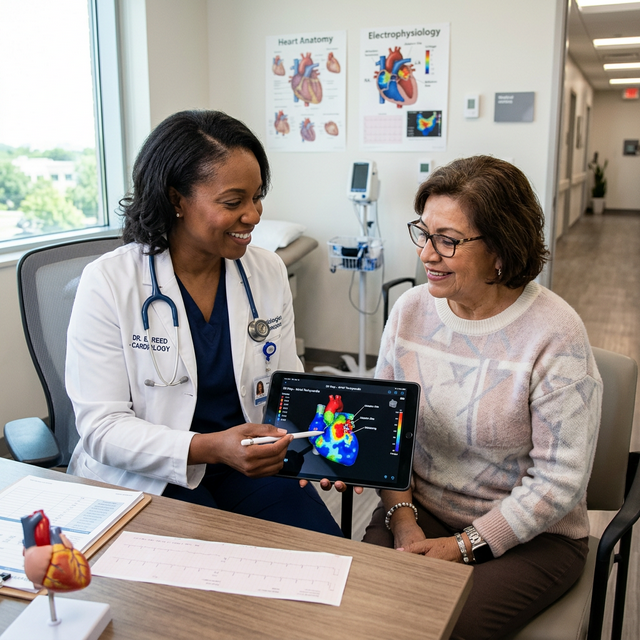
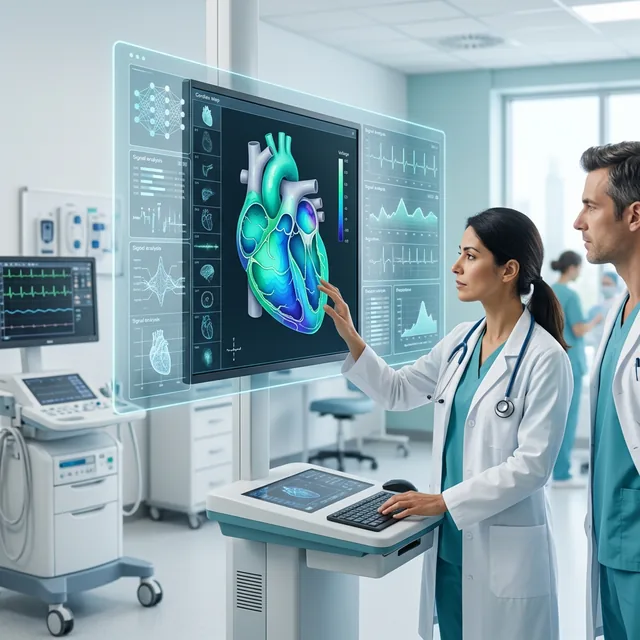
The findings from recent studies highlight the transformative potential of artificial intelligence in cardiovascular electrophysiology. They primarily focused on diagnosis, mapping, and ablation of complex arrhythmias such as atrial fibrillation and ventricular tachycardia. Artificial intelligence had a superior performance in interpreting electrocardiograms and electrograms. That way it improves target identification and procedural efficiency. Also, AI can improve safety and long-term outcomes better than conventional approaches.
A consistent theme across multiple studies is the superiority of AI-guided ablation strategies over pulmonary vein isolation alone in persistent and longstanding persistent AF. For example, Deisenhofer et al. demonstrated that targeting AI-identified spatio-temporal dispersion areas in addition to PVI markedly increased freedom from arrhythmia at 1-year follow-up, which was particularly beneficial in patients with prolonged AF duration and advanced atrial remodeling, i.e., subgroups where PVI alone offered moderate effects only. These findings imply that AI enhances reproducibility and objectivity in ablation target selection in a way that systematically categorizes complex EGM clusters. For that reason, artificial intelligence can address a key limitation of operator-dependent interpretation. Additionally, Bahlke et al. reported an impressive 82% freedom from AF and atrial tachycardia following an average of 1.46 procedures when using the Volta VX1 machine learning software together with PVI. These findings further support the value of AI in tackling intricate atrial substrates. Findings by Bahlke et al. align with previous research where Seitz et al. discussed the role of the same AI-based platform in standardizing outcomes across centers.
Procedural efficacy and safety are major advantages of AI integration. For instance, Fox et al. reported that forward-solution AI ECG mapping achieved high predicted chamber efficacy (95.5%), which may lead to reduced time to first ablation, shorter overall procedure length, and reduced fluoroscopy exposure without jeopardizing outcomes. Through early insights into likely arrhythmia-sustaining sites, AI facilitates focused mapping and has the potential to minimize extensive intra-chamber catheter manipulation, which is mainly useful for localizing rare ectopic foci or defining protected isthmuses in cases of unstable VT. The DeePRISM model further exemplified real-time decision support. It helped achieve acute AF termination in 40% of cases and 70% arrhythmia-free survival at two years.
It’s about more than just ablation. Artificial intelligence also helps improve diagnostic accuracy and risk mitigation.
Johnson et al. described the superiority of AI over human technicians in analyzing prolonged ECG recordings. As a result, AI can help reduce missing severe arrhythmias. Liu et al. extended this to clinical decision-making and found that AI-ECG alerts improved AF detection and NOAC prescription by noncardiologists across diverse clinical settings.
Plus, it lowered gastrointestinal bleeding rates.
AI also shows potential when integrated with wearable and implantable devices. It boosts continous monitoring. AI enables the early detection of irregular rhythms. Evidence shows that this timely intervention means AI could reduce stroke risk.
Wang et al. showed in their preclinical work in a porcine model that AI can help automate VT substrate localization. This shows promise for translating these results to relapse prevention in humans.
Comprehensive reviews, such as work by Cipollone et al, reinforce the abovementioned observations regarding the use of AI in cardiovascular electrophysiology. They emphasize the broad capabilities of AI.
These capabilities include arrhythmia classification, electro-anatomical mapping optimization, and reduced procedure time. Predictive detection is also incredibly useful. It helps to detect aspects like electrolyte imbalances, as well as asymptomatic conditions.
The AI supports tailored post-ablation management and diagnostic yield. It works by automating waveform analysis and minimizing false positives in implantable loop recorders.
Despite major breakthrough of AI in cardiovascular electrophysiology, there are still some challenges and limitations to be aware of. Certain AI-assisted approaches can prolong procedure durations due to extended mapping and ablation times. These problems can be mitigated with routine implementation and learning curves. Also, performance of AI may depend on the quality of underlying algorithms and integration with existing systems.
There’s still a lack of research on other heart rhythm abnormalities. Right now, most studies tend to focus on ventricular tachycardia and martial fibrillation.
Finally, the collective evidence from studies mentioned in this paper positions artificial intelligence as a powerful adjunct in cardiac electrophysiology. It offers a safer and more efficient management of arrhythmias. The ability of artificial intelligence to outperform human interpretation in complex scenarios, guide targeted therapies, and improve long-term freedom from recurrence shows a paradigm shift toward precision medicine in this specific field.
Now that we have this evidence, it lays a foundation for future research. Looking at the coming years, new research should shift its focus to broader validation by using a multicenter approach. They should also assess cost-effectiveness and address other types of arrhythmias. AI models need refinement to maximize clinical adoption and to improve patient outcomes.
Conclusion
The use of artificial intelligence into cardiovascular electrophysiology is a significant step forward in management of heart rhythm abnormalities. Evidence from recent studies consistently shows that AI has a lot to offer. It can increase diagnostic accuracy and procedural safety and improve long-term outcomes. The AI is particularly important in complex cases of persistent and long-standing AF and VT. When used in combination with standard procedures such as PVI, AI-assisted ablation strategies provide superior arrhythmia-free survival than these methods alone. The automated waveform analysis and real-time decision support can reduce procedural times. They can also decrease radiation exposure and lower diagnostic errors. The use of AI with ECG monitoring, wearable devices, and clinical decision support systems can improve anticoagulation management. It can also help with earlier detection and reduce complication risks. Artificial intelligence can address key limitation of traditional operator-dependent interpretation. That happens because AI offers objective, reproducible, and standardized tools for risk management and target identification. For that reason, AI is set to transform cardiac electrophysiology. This field is about to become more efficient, precise, and patient-centered.
References
[1]Sridhar A, Han J, Padmanabhan D. Cardiac arrhythmias. Nature.com. Communications Medicine. https://www.nature.com/collections/ccghcjejeh
[2] Ganesan AN, Shipp NJ, Brooks AG, et al. Long-term outcomes of catheter ablation of atrial fibrillation: a systematic review and meta-analysis. J Am Heart Assoc. 2013;2(2):e004549. Published 2013 Mar 18. doi:10.1161/JAHA.112.004549
[3]Platonov PG, Calkins H, Hauer RN, et al. High interobserver variability in the assessment of epsilon waves: Implications for diagnosis of arrhythmogenic right ventricular cardiomyopathy/dysplasia. Heart Rhythm. 2016;13(1):208-216. doi:10.1016/j.hrthm.2015.08.031
[4]Deisenhofer I, Albenque JP, Busch S, et al. Artificial intelligence for individualized treatment of persistent atrial fibrillation: a randomized controlled trial. Nat Med. 2025;31(4):1286-1293. doi:10.1038/s41591-025-03517-w
[5] Liu C.M. et al. Heart Rhythm 2025 features advances in AI that enhance safety of atrial fibrillation treatment. Heart Rhythm Society https://heartrhythm.com/heart-rhythm-media-room/hr2025-features-advanced-ai-safety-afib-treatment
[6]Fox SR, Toomu A, Gu K, et al. Impact of artificial intelligence arrhythmia mapping on time to first ablation, procedure duration, and fluoroscopy use. J Cardiovasc Electrophysiol. 2024;35(5):916-928. doi:10.1111/jce.16237
[7] Bahlke F, Englert F, Popa M, et al. First clinical data on artificial intelligence-guided catheter ablation in long-standing persistent atrial fibrillation. J Cardiovasc Electrophysiol. 2024;35(3):406-414. doi:10.1111/jce.16184
[8] Seitz J, Durdez TM, Albenque JP, et al. Artificial intelligence software standardizes electrogram-based ablation outcome for persistent atrial fibrillation. J Cardiovasc Electrophysiol. 2022;33(11):2250-2260. doi:10.1111/jce.15657
[9] Cipollone P, Pierucci N, Matteucci A, et al. Artificial Intelligence in Cardiac Electrophysiology: A Comprehensive Review. J Pers Med. 2025;15(11):532. Published 2025 Nov 3. doi:10.3390/jpm15110532
[10] Wang X, Dennis A, Hesselkilde EM, et al. Machine learning approach for automated localization of ventricular tachycardia ablation targets from substrate maps: development and validation in a porcine model. Eur Heart J Digit Health. 2025;6(4):645-655. Published 2025 Jun 10. doi:10.1093/ehjdh/ztaf064
[11] Țica O, Champsi A, Duan J, Țica O. Artificial Intelligence in the Diagnosis and Management of Atrial Fibrillation. Diagnostics (Basel). 2025;15(20):2561. Published 2025 Oct 11. doi:10.3390/diagnostics15202561
[12] Johnson LS, Zadrozniak P, Jasina G, et al. Artificial intelligence for direct-to-physician reporting of ambulatory electrocardiography. Nat Med. 2025;31(3):925-931. doi:10.1038/s41591-025-03516-x
[13] Liu WT, Lin C, Lee CC, et al. Artificial Intelligence-Enabled ECGs for Atrial Fibrillation Identification and Enhanced Oral Anticoagulant Adoption: A Pragmatic Randomized Clinical Trial. J Am Heart Assoc. 2025;14(14):e042106. doi:10.1161/JAHA.125.042106

Licensed physician and clinical AI specialist. Founder and Editor-in-Chief of ZayedMD, a physician-led medical publication covering clinical AI, neurology, metabolic health, and evidence-based patient guidance.