
Millions of patients rely on the accurate decisions we make every day. In some cases, clinical workflows can be so demanding that it limits a person’s ability to keep up with the latest technological advancements. If you are integrating new software into your practice, you are not alone in feeling overwhelmed. Artificial intelligence is one of the most common types of innovations hospitals are adopting right now. However, it can be difficult to trust algorithms with complex patient data. Did you know that unvalidated tools can introduce serious risks into your diagnostic process? Optura recently raised $17.5M in Series A funding backed by Salesforce and Echo Health Ventures. This platform focuses entirely on tracking the value and performance of healthcare AI tools. Ensuring algorithmic reliability is essential to preventing clinical hallucinations and workflow disruptions. Your patients deserve tools that have been rigorously tested in real-world settings. In this blog post, we will discuss how tracking clinical AI performance can protect your practice, validate algorithms, and improve patient outcomes.
What is the current state of artificial intelligence in medicine?
Artificial intelligence has rapidly moved from research labs into active clinical environments across the globe. Your clinic might already be using these tools for administrative tasks, scheduling, and other daily operations. However, the integration process is rarely seamless. Many systems are deployed before their long-term reliability is fully understood by the medical staff using them. It helps to look at the recent evolution in gastroenterology to understand this shift. Artificial intelligence in colonoscopy has advanced rapidly from basic polyp detection to complex optical diagnosis (Kim ES et al, The Korean journal of internal medicine 2024). The technology can flag suspicious lesions in real time. Besides this, computer vision innovations are enhancing surgical performance in cardiothoracic surgery (Constable MD et al, Journal of cardiothoracic surgery 2024).
These advancements are undeniably impressive. However, if you’re wondering why many physicians remain cautious, it comes down to ongoing validation. Real-world performance often drops significantly compared to controlled clinical trial data. The algorithms face diverse patient populations, different camera systems, and unique lighting conditions in actual operating rooms. This variability makes it essential to evaluate every new tool continuously. You cannot simply install a software package and assume it will perform perfectly forever. The environment changes. The tool must adapt to new variables.
The gap between trials and reality
Clinical trials select very specific patient cohorts. Your daily practice does not have that luxury. When an algorithm encounters anomalous data, it can struggle to make sense of the inputs. This is exactly where independent oversight platforms become an essential part of the ecosystem. They bridge the gap by monitoring how the software behaves when faced with unpredictable clinical scenarios. By monitoring these systems daily, these platforms ensure the models do not drift into dangerous territory.
How do clinical hallucinations threaten patient safety?
When an artificial intelligence model encounters data it does not understand, it does not simply stop working and ask for help. In many situations, it will generate a highly confident but entirely incorrect output. This phenomenon is known as a clinical hallucination. These errors are incredibly dangerous because they can look completely plausible to a rushed physician. The system might invent a non-existent lung nodule, misread an arrhythmia, and other diagnostic errors.
Did you know that almost 30% of new software alerts in busy hospital wards turn out to be false positives? These false positives and false negatives require significant mental bandwidth to catch during a busy shift. The effects of generative artificial intelligence on cognitive effort and task performance have been studied in randomized controlled experiments, showing that interacting with AI can actually change how much cognitive load a user experiences (Chen Y et al, Trials 2025). If a tool produces too many false alerts, alarm fatigue quickly sets in. You might start ignoring the system entirely.
There is also the severe risk of over-reliance on automated outputs. Performance of artificial intelligence-based models for epiretinal membrane diagnosis has shown great promise in systematic reviews and meta-analyses, but these models still require careful validation to avoid diagnostic errors (Mikhail D et al, American journal of ophthalmology 2025). Some studies reveal that AI accuracy is sometimes only equal to human readers, meaning the technology does not necessarily replace the need for an expert specialist. Counter-evidence from real-world deployments shows that false positive rates can spike when models are applied outside their original training data. Your expert oversight remains an essential safeguard.
Why is tracking clinical AI performance essential?
Optura securing $17.5M in Series A funding highlights a massive shift in how the healthcare industry views algorithmic safety. Hospitals are finally realizing that buying an AI tool is only the first step in a long journey. You need an all-rounded solution to monitor that tool over time. Tracking clinical AI performance ensures that the software continues to deliver value and remains safe for patient care day after day.
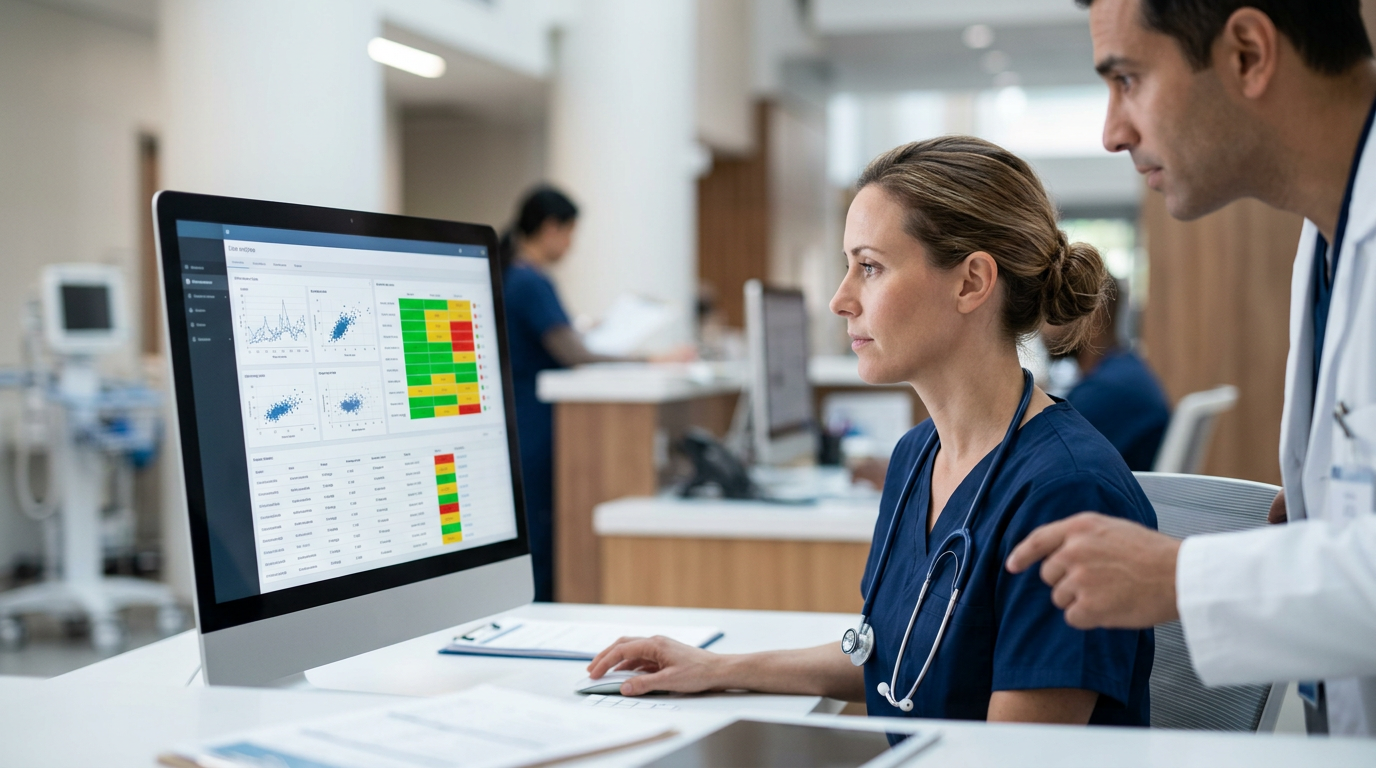
When algorithms degrade, the decline is often subtle and hard to detect manually. A model trained to detect pneumonia on chest X-rays might slowly lose accuracy if the hospital upgrades its imaging equipment. The AI is now processing slightly different pixel densities. Without a tracking platform, this degradation could go unnoticed for months. Platforms such as Optura are designed to catch these subtle drifts immediately. They provide a clear dashboard that shows exactly how the algorithm is performing against expected medical benchmarks.
The financial aspect of software validation
It is not just about clinical safety and patient outcomes. Hospital administrators need to know that their expensive software investments are actually improving efficiency. By monitoring metrics such as time saved per scan or reduction in readmission rates, these oversight platforms justify the cost of the technology. They prove the true clinical value of the tool.
Role of algorithmic tracking in surgical settings
The operating room is one of the most complex and high-stakes environments in any healthcare facility. Tracking clinical AI performance in this setting requires processing massive amounts of data in real time. Let’s look at some fascinating examples of how this is already happening. Artificial intelligence tracking of otologic instruments in mastoidectomy videos allows for detailed skill assessment and safety monitoring during delicate ear surgeries (Liu GS et al, Otology & neurotology 2024). By following the surgeon’s tools frame by frame, the system can map out the procedure and identify any deviations from standard safety protocols.
What’s more, this advanced technology extends deeply into orthopedic procedures. Exploring the performance of an artificial intelligence-based load sensor for total knee replacements demonstrates how hardware and software must interact seamlessly to ensure proper joint balancing (Al-Nasser S et al, Sensors (Basel, Switzerland) 2024). The AI interprets the complex tension data from the sensor to guide the surgeon’s exact bone cuts.
In these critical scenarios, the cost of a hallucination is severe. If the load sensor misinterprets the data, the patient could end up with an unstable knee requiring revision surgery. This is exactly why continuous validation is essential for every device. The oversight platform must verify that the AI is interpreting the sensor data correctly across hundreds of unique procedures. It ensures that the algorithm has not developed a hidden bias based on a few outlier cases in its training data.
How is software performance validated in cardiology and imaging?
Cardiology relies heavily on precise imaging measurements to make life-saving decisions. A fraction of a millimeter can completely change a patient’s diagnosis and treatment plan. Artificial intelligence performance in cardiac magnetic resonance strain analysis for aortic stenosis must be validated rigorously with echocardiography and healthy controls to prove its clinical worth (Abramikas Ž et al, Medicina (Kaunas, Lithuania) 2025). The software has to consistently measure the complex deformation of the heart muscle across different phases of the cardiac cycle.
Overcoming calibration hurdles
Besides this, specialized ultrasound techniques demand perfect calibration to function safely. Artificial intelligence-based speckle featurization and localization for ultrasound speckle tracking velocimetry requires intense validation to track blood flow accurately (Lee HS et al, Ultrasonics 2024). The algorithms must map the tiny movement of acoustic speckles between rapid frames. If the tracking platform detects a sudden drop in accuracy, it can instantly alert the clinical team to recalibrate the machine or revert to manual measurements.
Your diagnostic confidence depends entirely on this hidden software infrastructure. When you look at an AI-generated cardiac strain report, you are trusting that the model has been thoroughly validated. Independent tracking platforms provide the necessary friction to ensure that software vendors do not quietly push flawed updates to your machines. They hold the algorithms strictly accountable. Yes, AI can process complex images much faster than a human. However, speed means absolutely nothing if the measurements are drifting off target.
What are the challenges in validating cognitive and neurological tools?
Neurological assessments are often highly subjective and difficult to quantify. Creating algorithms to measure these subtle clinical markers is a massive technological challenge. Recent insights from the eyes highlight a fascinating intersection between eye-tracking and artificial intelligence in dementia diagnosis (Norouzi M et al, Aging & mental health 2025). The sophisticated models analyze pupil dilation, gaze patterns, and other micro-movements to detect early cognitive decline long before symptoms appear.
These advanced tools are highly sensitive to small changes. They are also incredibly prone to environmental noise and unrelated medical issues. A patient who simply had a bad night of sleep or suffers from dry eyes might generate eye-tracking data that the algorithm misinterprets as early-stage dementia. This is a classic example of a clinical hallucination in a non-imaging context. Validating these complex cognitive models requires tracking their performance across vast and incredibly diverse patient populations to rule out confounding factors.
Interestingly, the underlying technology for these tracking systems is highly adaptable across different fields. Object detection and tracking using a high-performance artificial intelligence-based 3D depth camera has even been utilized towards early detection of African swine fever in veterinary medicine (Ryu HW et al, Journal of veterinary science 2022). The mathematical principles of monitoring movement and behavior are surprisingly similar across species. However, applying them to human neurology demands an entirely different level of regulatory oversight. You have to prove that the model works safely for your specific clinical demographic.
The complete clinical integration plan
If you are wondering whether to go for a new diagnostic algorithm, you need a highly structured approach. Never deploy a new tool without a solid plan for continuous evaluation. Tracking clinical AI performance must be built right into your standard operating procedures from day one.
Initial assessment and pilot testing
Your integration process should always start with a limited pilot program. Run the new AI software silently in the background without letting it influence any clinical decisions. Compare its automated outputs against your own expert medical assessments. This shadow mode allows you to gather essential baseline data on its accuracy and false positive rates. If you notice frequent hallucinations during the pilot, you can halt the deployment before it ever affects patient care.
Scaling and continuous feedback
Once the software successfully passes the pilot phase, you can turn it on for active clinical use. In that case, you will need a dedicated platform to manage the ongoing data. Optura and similar oversight tools integrate directly into your electronic health record system. They carefully track every time a physician accepts, modifies, or rejects an AI recommendation. This continuous feedback loop is an essential safety mechanism. It highlights which algorithms are genuinely helpful and which ones are just creating extra administrative clicks. It provides an all-rounded strategy for managing your digital health tools safely.
Is platform oversight the future of medical algorithms?
YES! You heard that right. The unchecked era of medical artificial intelligence is rapidly coming to an end. Hospitals are no longer willing to purchase algorithms on blind faith alone. They demand concrete proof of safety. Platforms that sit directly between the AI vendor and the hospital’s IT infrastructure will soon become the absolute industry standard.
These specialized oversight platforms act as a digital immune system for your clinic. They constantly scan the daily performance of your software tools, looking for subtle signs of degradation or hidden demographic bias. If an algorithm starts hallucinating, the platform can automatically quarantine it and alert your technical team. This level of automation is essential because human administrators simply cannot monitor thousands of complex AI decisions manually every single day.
By investing $17.5M into Optura, major tech players such as Salesforce are betting heavily on this exact oversight model. They deeply understand that trust is the ultimate currency in healthcare. If physicians do not trust the algorithms, they will simply ignore them. Independent validation builds that critical trust. It assures the clinical staff that someone is actively watching the software.
Conclusion
Undoubtedly, deciding to integrate artificial intelligence into your daily workflow is a major commitment that requires careful thought. The technology promises to streamline your diagnostics, improve surgical precision, and reduce your overall administrative burden. However, you cannot ignore the severe risks of algorithmic drift and dangerous clinical hallucinations. Optura’s recent funding proves that continuous safety validation is quickly becoming the top priority in digital health. By prioritizing systems that focus heavily on tracking clinical AI performance, you can protect your practice from hidden software errors. Your patients rely entirely on your expertise to filter out bad information and make safe decisions. If you adopt carefully validated tools and maintain strict human supervision, you can rest assured that your transition to augmented healthcare will be safe and successful.
References
- Chen Y et al. Effects of generative artificial intelligence on cognitive effort and task performance: study protocol for a randomized controlled experiment among college students. Trials 2025. doi:10.1186/s13063-025-08950-3 (PMID: 40646586)
- Liu GS et al. Artificial Intelligence Tracking of Otologic Instruments in Mastoidectomy Videos. Otology & neurotology : official publication of the American Otological Society, American Neurotology Society [and] European Academy of Otology and Neurotology 2024. doi:10.1097/MAO.0000000000004330 (PMID: 39473329)
- Mikhail D et al. Performance of Artificial Intelligence-Based Models for Epiretinal Membrane Diagnosis: A Systematic Review and Meta-Analysis. American journal of ophthalmology 2025. doi:10.1016/j.ajo.2025.05.041 (PMID: 40456398)
- Lee HS et al. Artificial intelligence-based speckle featurization and localization for ultrasound speckle tracking velocimetry. Ultrasonics 2024. doi:10.1016/j.ultras.2024.107241 (PMID: 38232448)
- Norouzi M et al. Insights from the eyes: a systematic review and meta-analysis of the intersection between eye-tracking and artificial intelligence in dementia. Aging & mental health 2025. doi:10.1080/13607863.2025.2464704 (PMID: 39950960)
- Al-Nasser S et al. Exploring the Performance of an Artificial Intelligence-Based Load Sensor for Total Knee Replacements. Sensors (Basel, Switzerland) 2024. doi:10.3390/s24020585 (PMID: 38257676)
- Ryu HW et al. Object detection and tracking using a high-performance artificial intelligence-based 3D depth camera: towards early detection of African swine fever. Journal of veterinary science 2022. doi:10.4142/jvs.21252 (PMID: 35088954)
- Kim ES et al. Artificial intelligence in colonoscopy: from detection to diagnosis. The Korean journal of internal medicine 2024. doi:10.3904/kjim.2023.332 (PMID: 38695105)
- Constable MD et al. Enhancing surgical performance in cardiothoracic surgery with innovations from computer vision and artificial intelligence: a narrative review. Journal of cardiothoracic surgery 2024. doi:10.1186/s13019-024-02558-5 (PMID: 38355499)
- Abramikas Ž et al. Artificial Intelligence Performance in Cardiac Magnetic Resonance Strain Analysis for Aortic Stenosis: Validation with Echocardiography and Healthy Controls. Medicina (Kaunas, Lithuania) 2025. doi:10.3390/medicina61060950 (PMID: 40572638)
- https://www.fiercehealthcare.com/ai-and-machine-learning/salesforce-echo-health-ventures-backs-opturas-175m-series-track-value-ai

Licensed physician and clinical AI specialist. Founder and Editor-in-Chief of ZayedMD, a physician-led medical publication covering clinical AI, neurology, metabolic health, and evidence-based patient guidance.