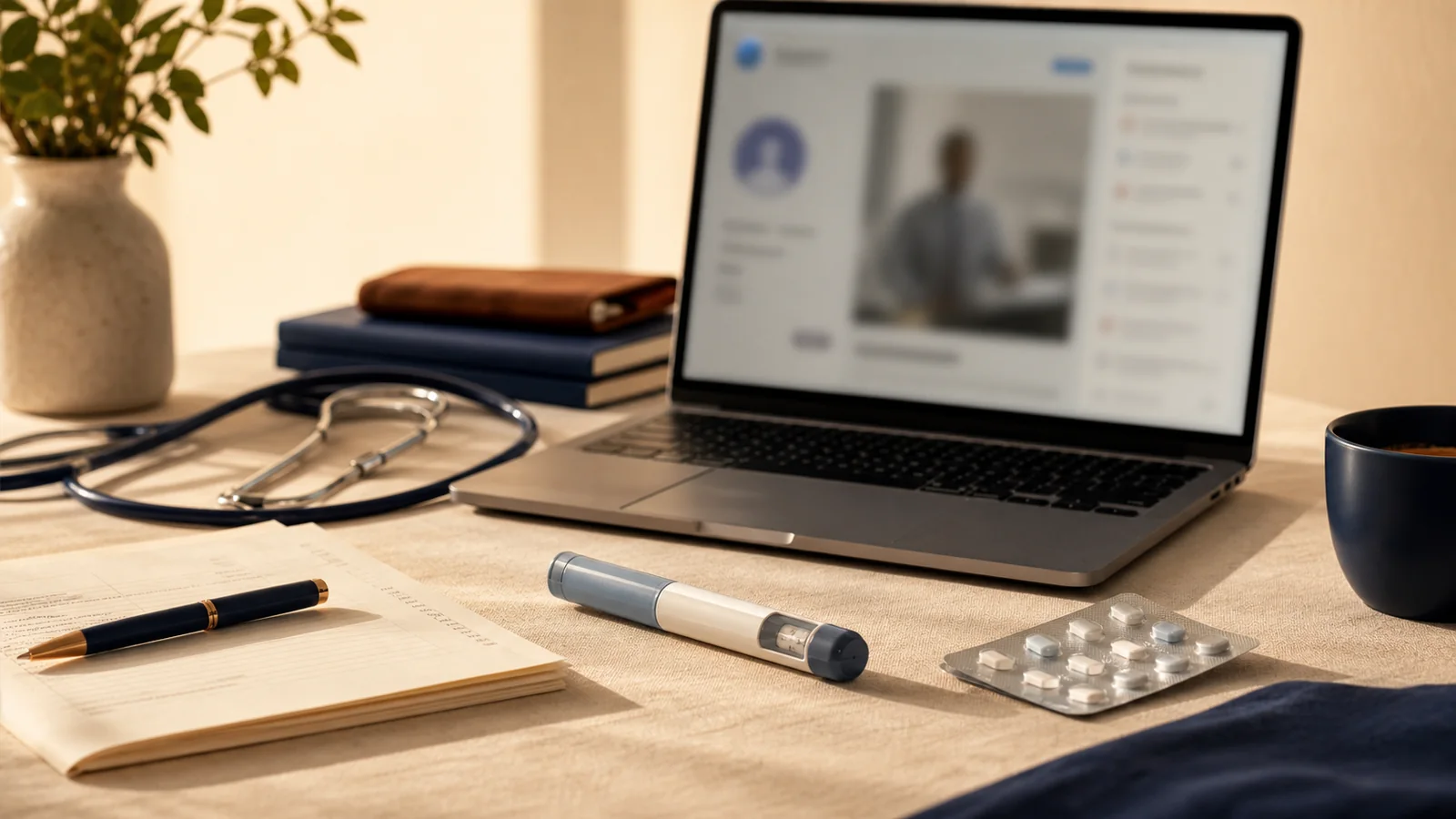

Managing the rapid shift in metabolic care can be frustrating. Did you know that countless primary care practices are seeing a sharp decline in routine weight management visits? It can keep you from providing consistent care to the patients who need it most. If you are experiencing a drop in these essential consults, you are not alone. Asynchronous telehealth is capturing a massive share of the obesity market every single month. Recently, the industry saw a major move when Amazon tapped Amwell veteran Roy Schoenberg to lead its healthcare business. The leadership transition indicates a strategic shift toward deeply integrating One Medical’s physical clinics with Amazon Clinic’s asynchronous telehealth model. This move is poised to accelerate their dominance in high-demand consumer care. Specifically, the retail giant is targeting the highly lucrative weight loss prescription market. In this blog post, we will discuss how Amazon GLP-1 prescribing is evolving, what the clinical evidence says about digital obesity management, and how your practice can adapt to these changes.
What is the Amazon GLP-1 prescribing model?
Roy Schoenberg is a well-known telehealth pioneer with years of experience building virtual care networks. With Neil Lindsay stepping down, Amazon is clearly signaling a new direction for its healthcare division. Amazon GLP-1 prescribing relies heavily on a digital-first approach that prioritizes speed and convenience. It involves using asynchronous intake forms and virtual messaging to evaluate patients for weight management medications. Your patients can simply log on, answer a series of clinical questions about their medical history, and receive a prescription from a remote provider without ever stepping foot inside a physical clinic.
The push for asynchronous efficiency
Essentially, the goal is to remove all friction from the healthcare experience. Amazon wants to make getting a GLP-1 receptor agonist as easy as ordering household goods online. However, if you want to understand the true impact on primary care, you have to look at the sheer scale of their operation. They are combining the physical footprint of One Medical with the rapid virtual access of Amazon Clinic. This creates a powerful hybrid model that can capture patients online and direct them to physical locations only when absolutely necessary. Yes, traditional clinics can offer similar medications. However, they struggle to match the speed of a fully integrated digital platform. Let’s take a look at the clinical evidence behind this shift.
The Role of Telehealth in Obesity Management
If you’re wondering why patients are flocking to these digital platforms, the clinical data provides a clear answer. Telehealth interventions are highly effective for weight loss. Alolayan et al, *Healthcare (Basel, Switzerland)* 2024 compared telehealth versus in-person management delivery in adult patients with obesity. The researchers found that telehealth outcomes were remarkably similar to traditional clinic visits. Patients lost significant weight and maintained their progress through regular virtual check-ins, dietary counseling, and remote monitoring. The digital approach did not compromise the quality of the weight loss outcomes.
Evidence across different demographic groups
Besides this, virtual care is proving useful across very different demographic groups. For instance, Calcaterra et al, *Nutrients* 2021 showed that telehealth is a useful tool for the management of nutrition and exercise programs in pediatric obesity. During the COVID-19 era, digital touchpoints kept children and families engaged in their health routines when physical clinics were closed. The remote format allowed dietitians and doctors to provide continuous support. Moreover, Ferrara et al, *The lancet. Diabetes & endocrinology* 2020 conducted the GLOW trial. This was a randomised, parallel-group, controlled trial looking at a telehealth lifestyle intervention to reduce excess gestational weight gain in pregnant women with overweight or obesity. The digital intervention successfully helped pregnant women manage their weight from their homes. These studies show that the underlying concept of virtual obesity management is completely validated across various patient populations.
How will mobile apps change primary care volumes?
There is no exaggeration in saying that mobile health applications are changing the standard of care. Patients no longer want to wait weeks for a standard follow-up appointment. They prefer to track their calories, message their providers, and order their medications through an app on their smartphone. Pujia et al, *Journal of medical Internet research* 2025 published a systematic review and meta-analysis on the role of mobile apps in obesity management. They found that app users experienced better adherence to their treatment plans and achieved more consistent weight loss over time. The constant connection to a care platform makes a huge difference in patient motivation and accountability.
Expanding digital access through technology
What’s more, these digital health interventions are essential for managing chronic diseases such as diabetes alongside obesity. Wang et al, *JMIR mHealth and uHealth* 2020 reviewed the effectiveness of mobile health interventions on diabetes and obesity treatment. The data confirmed that mobile tools significantly improve HbA1c levels and body mass index across large patient populations. The researchers looked at multiple systematic reviews and found a consistent pattern of positive metabolic changes when patients used mobile health tools. Moreover, Palacios et al, *The Cochrane database of systematic reviews* 2025 evaluated technology-driven or technology-assisted interventions for the management of obesity in children and adolescents. The findings suggest that early digital interventions can prevent long-term metabolic complications from developing. As Amazon scales its asynchronous platform, it will naturally capture the patients who prefer this tech-forward approach.
Are there limitations to virtual obesity management?
Although it may seem like digital clinics are the perfect solution, there are serious clinical blind spots that traditional practices must address. Virtual care cannot physically measure a patient’s body composition. This is a critical issue when prescribing GLP-1 receptor agonists. Caturano et al, *Current opinion in clinical nutrition and metabolic care* 2025 investigated sarcopenic obesity and weight loss-induced muscle mass loss. When patients lose weight rapidly on these medications, a significant portion of that weight can come from lean muscle tissue rather than fat. If a patient loses too much muscle, their functional strength decreases. They are at risk for sarcopenia, frailty, falls, and other health problems. The researchers emphasized that weight loss alone is not always a healthy outcome if the body composition is compromised.
The absolute need for in-person clinical assessment
You cannot accurately track muscle mass loss through a digital questionnaire or a brief video call. You need in-person DEXA scans and physical assessments. This is where the Amazon GLP-1 prescribing model faces a major limitation. A purely asynchronous platform might miss the early signs of severe muscle wasting. In some cases, patients require detailed nutritional counseling to protect their lean mass while they lose weight. Morgan-Bathke et al, *Journal of the Academy of Nutrition and Dietetics* 2023 outlined medical nutrition therapy interventions provided by dietitians for adult overweight and obesity management. Their evidence-based practice guideline stresses the need for personalized, professional dietary support. An all-rounded treatment plan requires a combination of medication, physical activity, and expert nutritional guidance that is tailored to the individual’s unique metabolic profile.
Systemic Impacts of GLP-1 Receptor Agonists
If you’re wondering what makes the weight loss market so incredibly valuable to large corporations, you have to look beyond simple weight reduction. These medications offer profound systemic benefits that improve overall longevity. Obesity is linked to numerous severe health conditions, including various forms of aggressive cancer. Wang et al, *JAMA network open* 2024 evaluated glucagon-like peptide 1 receptor agonists and 13 obesity-associated cancers in patients with type 2 diabetes. The study demonstrated a clear, statistically significant reduction in cancer risk for patients treated with these medications over a prolonged period. The metabolic improvements directly suppressed the pathways that fuel tumor growth.
Long-term disease prevention and metabolic control
Yes, the preventive power of these drugs is truly remarkable. Wang et al, *JAMA oncology* 2024 specifically looked at GLP-1 receptor agonists and colorectal cancer risk in drug-naive patients with type 2 diabetes, with and without overweight or obesity. The findings showed a significant protective effect against colorectal cancer regardless of the patient’s starting weight. Moreover, treating obesity early helps prevent severe diabetic complications that destroy peripheral tissues. Chan et al, *Lancet (London, England)* 2021 discussed using data to transform diabetes care in The Lancet Commission on diabetes. Proper metabolic control can prevent advanced tissue damage and preserve organ function. Sen, *Advances in wound care* 2021 highlighted the human wound burden, which is heavily driven by uncontrolled diabetes and poor circulation. By managing obesity effectively with these medications, clinicians can prevent these downstream complications entirely.
How does Artificial Intelligence fit into the treatment plan?
As digital health platforms grow, they are rapidly incorporating advanced technology to personalize care at scale. Amazon is extremely well-positioned to integrate machine learning into its prescribing algorithms. Landau et al, *Biomedicines* 2025 explored employing an Artificial Intelligence platform to enhance treatment responses to GLP-1 agonists. By utilizing metabolic variability signatures based on the constrained disorder principle, AI systems can predict which patients will respond best to specific dosages. This means that future asynchronous models might rely heavily on AI to adjust prescriptions in real-time based on patient feedback and side effect profiles.
The neuroscience of advanced appetite control
To truly optimize these treatments, researchers are mapping exactly how the human brain responds to the medication. Zhang et al, *Cell* 2022 identified an inter-organ neural circuit for appetite suppression. The study mapped the exact neural pathways that transmit fullness signals from the gut to the brain. Understanding these neural circuits is essential for developing next-generation drugs that minimize adverse reactions such as nausea, vomiting, and other gastrointestinal distress. It helps treat various metabolic conditions with much greater precision. As AI platforms learn to interpret subjective patient feedback alongside objective lab data, they will be able to fine-tune therapies based on these complex biological mechanisms.
Next-generation pharmacology and the D2C market
The medications themselves are becoming increasingly sophisticated every single year. We are currently moving past single-receptor agonists into highly potent dual and triple-receptor treatments. Zhao et al, *Nature communications* 2022 provided structural insights into multiplexed pharmacological actions of tirzepatide and peptide 20 at the GIP, GLP-1 or glucagon receptors. By targeting multiple metabolic pathways simultaneously, these multi-target drugs produce far greater weight loss than earlier generations of medication. The structural biology shows exactly how these molecules bind to multiple receptors to maximize metabolic efficiency.
Adapting to powerful new treatments
However, these advanced drugs also require much more careful clinical monitoring. As patients lose larger amounts of weight at faster speeds, the risk of malnutrition and severe muscle loss increases exponentially. The direct-to-consumer market will have to evolve rapidly to handle these potent new therapies safely. A simple asynchronous chat might not be enough to properly manage a patient who is losing twenty percent of their total body weight in just a few months.
What should traditional practices do next?
The shift toward asynchronous care is inevitable, no doubt. In that case, you will need to adapt your clinical practice to stay competitive in a changing environment. You cannot beat a massive tech company on digital convenience or basic prescription refills. Instead, you should focus entirely on the high-acuity care that virtual platforms simply cannot provide through a screen. Offer comprehensive body composition testing, in-person nutritional counseling, and advanced metabolic tracking. Your clinic is essential for managing complex patients who experience side effects, plateaus, or dangerous muscle loss. Focus on building an all-rounded approach that treats the whole patient, rather than just writing a prescription and hoping for the best. By offering specialized services such as DEXA scans and physical therapy, you can capture the patients who need more support than an app can offer.
Conclusion
Undoubtedly, the rapid expansion of direct-to-consumer prescribing is permanently altering the medical field. Millions of patients are turning to asynchronous platforms for their weight management needs because of the sheer convenience. The appointment of Roy Schoenberg signals that this trend is only going to accelerate as Amazon integrates physical and digital care. While virtual care is highly effective for many people, it is not a perfect solution for everyone. Sarcopenic obesity, severe muscle wasting, and complex metabolic conditions still require hands-on, localized care from experienced professionals. If you follow the clinical evidence and adjust your practice model to offer specialized, in-person services, you can rest assured that your clinic will continue to thrive in this new era.
References
- Calcaterra V et al. Telehealth: A Useful Tool for the Management of Nutrition and Exercise Programs in Pediatric Obesity in the COVID-19 Era. Nutrients 2021. doi:10.3390/nu13113689 (PMID: 34835945)
- Wang Y et al. Effectiveness of Mobile Health Interventions on Diabetes and Obesity Treatment and Management: Systematic Review of Systematic Reviews. JMIR mHealth and uHealth 2020. doi:10.2196/15400 (PMID: 32343253)
- Pujia C et al. The Role of Mobile Apps in Obesity Management: Systematic Review and Meta-Analysis. Journal of medical Internet research 2025. doi:10.2196/66887 (PMID: 40327853)
- Caturano A et al. Sarcopenic obesity and weight loss-induced muscle mass loss. Current opinion in clinical nutrition and metabolic care 2025. doi:10.1097/MCO.0000000000001131 (PMID: 40296814)
- Ferrara A et al. A telehealth lifestyle intervention to reduce excess gestational weight gain in pregnant women with overweight or obesity (GLOW): a randomised, parallel-group, controlled trial. The lancet. Diabetes & endocrinology 2020. doi:10.1016/S2213-8587(20)30107-830107-8) (PMID: 32445736)
- Morgan-Bathke M et al. Medical Nutrition Therapy Interventions Provided by Dietitians for Adult Overweight and Obesity Management: An Academy of Nutrition and Dietetics Evidence-Based Practice Guideline. Journal of the Academy of Nutrition and Dietetics 2023. doi:10.1016/j.jand.2022.11.014 (PMID: 36462613)
- Chan JCN et al. The Lancet Commission on diabetes: using data to transform diabetes care and patient lives. Lancet (London, England) 2021. doi:10.1016/S0140-6736(20)32374-632374-6) (PMID: 33189186)
- Alolayan RA et al. The Efficacy of Telehealth Versus In-Person Management Delivery in Adult Patients with Obesity. Healthcare (Basel, Switzerland) 2024. doi:10.3390/healthcare12212190 (PMID: 39517400)
- Palacios C et al. Digital health, technology-driven or technology-assisted interventions for the management of obesity in children and adolescents. The Cochrane database of systematic reviews 2025. doi:10.1002/14651858.CD015968 (PMID: 40637164)
- Sen CK. Human Wound and Its Burden: Updated 2020 Compendium of Estimates. Advances in wound care 2021. doi:10.1089/wound.2021.0026 (PMID: 33733885)
- Zhang T et al. An inter-organ neural circuit for appetite suppression. Cell 2022. doi:10.1016/j.cell.2022.05.007 (PMID: 35662413)
- Wang L et al. Glucagon-Like Peptide 1 Receptor Agonists and 13 Obesity-Associated Cancers in Patients With Type 2 Diabetes. JAMA network open 2024. doi:10.1001/jamanetworkopen.2024.21305 (PMID: 38967919)
- Landau J et al. Employing an Artificial Intelligence Platform to Enhance Treatment Responses to GLP-1 Agonists by Utilizing Metabolic Variability Signatures Based on the Constrained Disorder Principle. Biomedicines 2025. doi:10.3390/biomedicines13112645 (PMID: 41301738)
- Zhao F et al. Structural insights into multiplexed pharmacological actions of tirzepatide and peptide 20 at the GIP, GLP-1 or glucagon receptors. Nature communications 2022. doi:10.1038/s41467-022-28683-0 (PMID: 35217653)
- Wang L et al. GLP-1 Receptor Agonists and Colorectal Cancer Risk in Drug-Naive Patients With Type 2 Diabetes, With and Without Overweight/Obesity. JAMA oncology 2024. doi:10.1001/jamaoncol.2023.5573 (PMID: 38060218)
- https://www.fiercehealthcare.com/health-tech/amazon-taps-roy-schoenberg-lead-healthcare-business-neil-lindsay-steps-down

Licensed physician and clinical AI specialist. Founder and Editor-in-Chief of ZayedMD, a physician-led medical publication covering clinical AI, neurology, metabolic health, and evidence-based patient guidance.