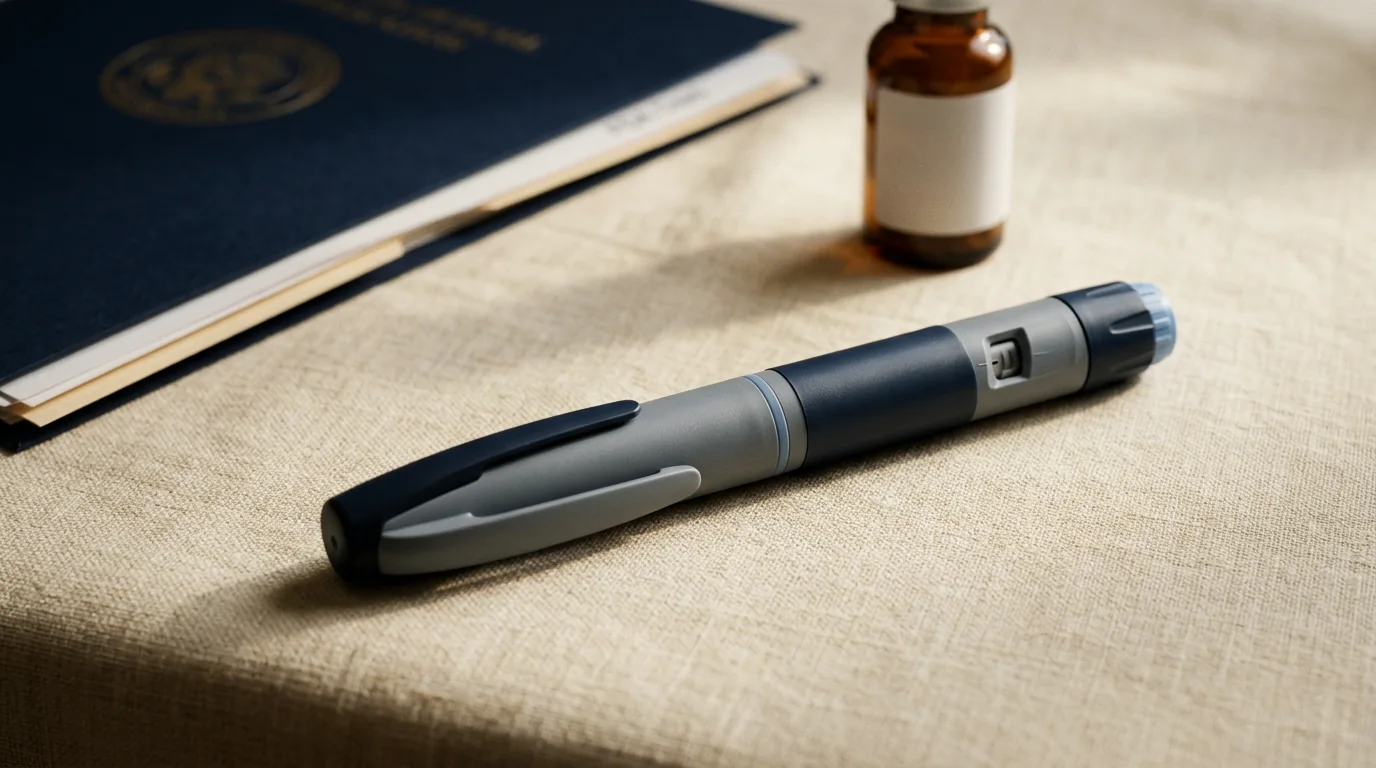

It is 9:00 PM on a Tuesday evening when the patient-portal notification chimes. The message is from a patient you have been treating for obesity over the past fourteen months. She has lost thirty pounds on compounded tirzepatide. She includes a link to a recent news headline about the FDA banning compounded weight-loss drugs. Her message is brief and anxious. She is asking what this means for her medication supply and her continued weight-loss progress.
This is a scenario playing out in primary-care clinics and obesity-medicine practices across the country right now. The regulatory environment surrounding glucagon-like peptide-1 receptor agonists is shifting rapidly. Patients who found an affordable path to treatment through compounded medications during the recent drug-shortage years are now facing a sudden disruption in access. They are looking to their physicians for answers. They need a clear plan to maintain their clinical progress as the supply chain normalizes and regulatory exceptions close.
The anxiety your patient feels is justified. The medication she relies on might soon be unavailable in its current form. As her physician, you are tasked with managing both her clinical treatment and her expectations regarding access and cost. In this blog post, we will discuss the recent FDA proposed rule ending the compounding pathway for GLP-1 medications, the clinical challenge of transitioning patients to branded products, and the specific conversations you need to have in clinic this week.
What the FDA actually proposed on April 30
On April 30, 2026, the Food and Drug Administration issued a [proposed rule that would end the 503B outsourcing-facility pathway for compounded GLP-1 medications](https://www.statnews.com/pharmalot/2026/04/30/fda-weight-loss-drugs-new-rule-would-end-glp-1-compound-pharmacy/). This is a specific regulatory action with immediate implications for clinical practice. The FDA is taking steps to remove semaglutide, tirzepatide, and liraglutide from the list of bulk drug substances for which there is a clinical need to compound under section 503B of the Food, Drug, and Cosmetic Act.
This proposed rule targets the specific legal mechanism that allowed large-scale compounding pharmacies to produce and distribute these medications without undergoing the standard FDA new-drug approval process. It is essential to understand the exact scope of this change. The proposal applies specifically to compounded versions of semaglutide, tirzepatide, and liraglutide. It means outsourcing facilities will lose the legal cover to manufacture these specific compounded products once the rule is finalized.
It is equally important to understand what is not in scope. This rule has zero impact on the availability or legal status of FDA-approved branded products, such as Wegovy, Zepbound, Mounjaro, Ozempic, and Saxenda. Those medications will continue to flow through standard pharmaceutical supply chains. As [Lilly’s communications around its broader GLP-1 pipeline](https://investor.lilly.com/news-releases/news-release-details/fda-approves-lillys-foundayotm-orforglipron-only-glp-1-pill) make clear, the branded market remains entirely separate from this compounding regulatory action.
The timeline for this change is the most important variable for your clinical planning. This is currently a proposed rule. It is subject to a standard public-comment period (citation needed: specific comment-period deadline). After the comment period closes, the FDA will review the feedback and issue a final rule. The final rule will include an effective date. While we cannot predict the exact date with certainty, the regulatory machinery is moving. You must plan for a reality where compounded GLP-1s are no longer legally available to prescribe by the end of this calendar year.
Why compounded GLP-1s existed in the first place
To manage the transition well, we must briefly review how we arrived at this point. The widespread use of compounded GLP-1s was not the standard of care prior to 2022. It was a direct consequence of a steep supply-and-demand mismatch. When the clinical efficacy of semaglutide and tirzepatide for weight management became widely recognized, patient demand completely overwhelmed the manufacturing capacity of the pharmaceutical companies holding the patents.
This severe supply constraint led the FDA to place these medications on the official drug-shortages list. That specific designation triggered a regulatory exception. Under section 503B of the Food, Drug, and Cosmetic Act, the FDA allows registered [outsourcing facilities to compound medications that are currently in shortage](https://www.fda.gov/drugs/human-drug-compounding/outsourcing-facilities-section-503b). This pathway is designed to ensure patient access to essential therapies when the commercial supply chain fails.
The 503B pathway allowed large compounding pharmacies to purchase raw bulk active pharmaceutical ingredients. They then manufactured injectable products that mimicked the branded drugs. These facilities are subject to current good manufacturing practice requirements, distinguishing them from smaller traditional compounding pharmacies. The intention was to bridge a temporary gap in commercial supply. As the manufacturers have invested billions in expanding their production capacity over the last two years, the official shortage conditions have resolved. The regulatory justification for allowing the compounded alternatives is therefore being withdrawn. This history is essential context for your patients, not a defense of long-term compounding practices.
What changes for the clinic
The finalized rule will force three concrete operational changes in your clinic. You need to prepare your staff and your clinical workflows for these shifts immediately.
You will lose the ability to write a new prescription for a compounded GLP-1 medication. Once the effective date of the final rule passes, directing a new patient to a compounding pharmacy for semaglutide or tirzepatide will fall outside accepted regulatory boundaries. Your clinical protocols for initiating obesity pharmacotherapy must default exclusively to FDA-approved branded products. If a new patient cannot access or afford a branded product, you cannot use a compounded alternative as a fallback option.
Every existing patient currently taking a compounded GLP-1 in your panel requires a formal transition plan. You cannot wait until the pharmacy rejects a refill request to address this. You need to run a registry report identifying these patients today. Your clinic must establish a hard target date for transitioning them to a commercial product. This date should align with the anticipated effective date of the final FDA rule. Proactive scheduling is required to manage the clinical workload this transition will generate.
You must also prepare for an influx of new patients who have lost their prescriber. The telehealth obesity-medicine market grew rapidly during the shortage period. Many of these direct-to-consumer platforms built their entire business models around prescribing and dispensing compounded GLP-1s. The loss of the 503B pathway will force many of these operators to exit the market entirely. Their patients will suddenly find themselves without a prescriber and without medication. These patients will present to primary-care clinics seeking to continue their treatment. You must have a clear intake protocol for evaluating these patients, verifying their prior treatment history, and determining an appropriate starting dose of a branded medication.
The dosing-equivalence problem
Transitioning a patient from a compounded GLP-1 to a branded product is a complex clinical task. It is absolutely not a simple one-to-one brand swap. You are dealing with entirely different formulations, and you cannot assume direct dose equivalence.
The most immediate challenge involves fill concentration and injection volume. Branded products use single-dose, pre-filled pens delivering a highly specific volume and concentration. Compounded products are typically dispensed in multi-dose vials. The concentration of the compounded liquid varies significantly between different pharmacies. Patients have been drawing their own doses using insulin syringes. A patient accustomed to injecting forty units of a compounded liquid may not understand how that translates to milligrams of active ingredient. If you assume their reported milligram dose is accurate without verifying the concentration of their specific vial, you risk significant dosing errors.
However, the active ingredients are not always identical either. Branded products use the pure base form of the molecule. During the shortage, some compounding facilities used salt forms of the active ingredients, such as semaglutide acetate or semaglutide sodium. These salt forms have different molecular weights and different pharmacokinetic profiles compared to the pure base molecule (citation needed: published comparative pharmacokinetics). The FDA has repeatedly warned that these salt formulations have not been evaluated for safety or efficacy. You cannot assume two milligrams of compounded semaglutide sodium will produce the exact same clinical effect or side-effect profile as two milligrams of branded Wegovy.
The transition therefore requires a deliberate dose-titration strategy. My approach in clinic is conservative. I do not map their reported compounded dose directly to the highest equivalent branded label dose. I prefer to start the patient at the lowest therapeutic dose of the branded equivalent, or one step below their estimated current dose. We then titrate upward as tolerated according to the standard package-insert schedule. This minimizes the risk of severe gastrointestinal adverse events during the transition. It requires closer monitoring and more frequent patient contact, but it is the safest clinical path.
The cost transition and what the CMS Bridge does and does not solve
The clinical transition is difficult. The financial transition will be impossible for many of your patients. You must prepare for very difficult conversations about the cost of care.
The cash-pay cost of compounded medications made them accessible to a broad demographic. Patients were typically paying between $200 and $400 per month out of pocket for compounded semaglutide or tirzepatide. The cash-pay cost for branded Zepbound or Wegovy without insurance coverage routinely exceeds $1,000 per month. This is a large step-change in cost. For patients without specific commercial insurance coverage for anti-obesity medications, this price difference represents an insurmountable barrier to continued treatment.
There is a separate policy development that addresses a small fraction of this problem. The Centers for Medicare and Medicaid Services recently extended its GLP-1 Bridge program, which is covered in a separate ZayedMD canonical (see the companion piece, Medicare’s $50 GLP-1 Bridge: What Physicians Need to Document) and detailed in the corresponding [CMS press release](https://www.cms.gov/newsroom/press-releases/coming-soon-cms-provide-50-monthly-access-glp-1-medications-medicare-beneficiaries). This program provides access to branded medications for $50 per month. However, the Bridge program is strictly limited to Medicare beneficiaries who meet the FDA-labeled obesity indication, such as BMI ≥30 or ≥27 with a weight-related comorbidity. It does not address commercial-payer coverage gaps for working-age adults.
The vast majority of the patients affected by the end of compounding are working-age adults. The commercial coverage gap is the central problem. Employer-sponsored health plans frequently exclude anti-obesity medications. You must familiarize yourself with manufacturer savings programs. The savings cards provided by Lilly for Mounjaro and Zepbound, and by Novo Nordisk for Wegovy, can reduce the out-of-pocket cost significantly. However, these programs usually require the patient to have commercial insurance that at least partially covers the drug. For the pure cash-pay patient with an exclusion on their commercial policy, the savings cards often leave the monthly cost near $500. That is still double what they were paying for the compounded version. You cannot solve this systemic access problem in your exam room, but you must accurately diagnose the financial reality for your patient.
Clinical Communication Strategies for Patient Counseling
When you step into the exam room this week, you need a structured conversation ready for the patient who asks about the news. The goal is to provide clarity, manage anxiety, and establish a clear plan.
I start by providing immediate reassurance. I tell the patient, “Nothing changes for your prescription today. The FDA announcement is a proposed rule, not an immediate ban. You can continue taking your current medication this week and next week. We have time to make a plan.” This de-escalates the immediate panic and allows the patient to hear the rest of the information.
Next, I provide an honest framing of the timeline. I say, “While there is no change today, the regulatory door is closing. The FDA is ending the exception that allowed compounding pharmacies to make these drugs. We should expect this transition to happen in the coming months. We need to plan for a reality where you will need to switch to the commercial, brand-name version of the medication before the end of the year.”
The patient will inevitably ask whether they should switch now or wait until the final rule takes effect. My clinical recommendation depends on their insurance status. I tell them, “If your insurance plan covers the brand-name medication, we should start the transition process now. There is no clinical benefit to remaining on the compounded version if the commercial product is accessible. If you are paying cash out of pocket, we will use the remaining time to evaluate your financial options, but we still need to build the transition plan today.”
I then explain the dose-titration plan. I am very clear about the process. I say, “When we make the switch, we are not going to simply guess the equivalent dose. Because the manufacturing processes are different, we will start you on a lower dose of the brand-name medication. We will slowly increase the dose over a few months to ensure you do not experience severe nausea or vomiting. Your weight loss might slow down slightly during this specific transition period, but safety is our primary concern.”
Finally, we address the cost. I ask them directly about their current insurance coverage and their monthly budget for the medication. I outline the cash-pay prices and the potential impact of manufacturer savings cards. We set a specific visit cadence. I require a follow-up appointment in four weeks to review their insurance-formulary investigation and finalize the exact date we will write the new prescription. Yes, that is more visits than usual, but the transition window is narrow.
Addressing Financial Barriers to Transition in Underprivileged Populations
You will have patients who look at the out-of-pocket cost for the branded product and tell you they simply cannot afford it. This is the hardest conversation in obesity medicine right now. You must provide an honest framing of their options without minimizing their valid frustration.
We must return to intensive lifestyle intervention as the primary therapeutic tool. This is a difficult pivot. It feels inadequate to offer dietary counseling to a patient who just experienced profound metabolic correction via pharmacotherapy. Yet it remains the foundational fallback. We must double down on registered-dietitian referrals and structured behavioral weight-management programs. The clinical goal shifts from driving further weight loss to aggressively mitigating weight regain.
For a specific subset of these patients, bariatric surgery becomes the most appropriate and cost-effective next step. If the patient has a body mass index greater than forty, or greater than thirty-five with a significant obesity-related comorbidity, we must initiate the surgical referral process. Insurance coverage for bariatric surgery is often stronger than coverage for chronic anti-obesity medications. We need to frame surgery not as a failure of medical therapy, but as a definitive, covered intervention when medication access is blocked.
We must also actively search for clinical-trial enrollment opportunities. The pharmaceutical pipeline for next-generation incretin therapies is large. Enrolling a patient in a phase-three trial provides them with access to potentially highly effective medication at no cost. I direct my patients to search clinicaltrials.gov for local study sites recruiting for obesity indications.
The most important clinical work here is managing the psychological impact of forced medication withdrawal. We must honestly acknowledge that biological weight regain is highly probable when the medication is stopped. We must assure the patient that this regain is a physiologic response to the withdrawal of the hormone, not a personal moral failure. Our job is to manage that regain collaboratively and without blame.
What this is NOT
To prevent the spread of misinformation among your patient panel, you must be very clear about the limits of this FDA action. Patients read headlines and often draw incorrect, catastrophic conclusions.
This rule is not a ban on GLP-1 medications. The FDA continues to recognize the profound clinical value of these drugs for treating type 2 diabetes, obesity, and cardiovascular risk. The regulatory action is solely focused on the manufacturing source of the medication, not the clinical utility of the drug class itself.
The rule has zero effect on FDA-approved branded products. If a patient is currently taking Wegovy or Zepbound, their treatment path is entirely unchanged. The commercial supply chains are operating normally and will continue to do so.
This rule does not affect patients using these medications for the type 2 diabetes indication who are already on commercial products. Patients with diabetes generally have better insurance coverage for Mounjaro and Ozempic compared to patients treating obesity alone. Their established treatment pathways remain secure.
Finally, this rule does not retroactively penalize any prescriptions written during the shortage period. You provided standard-of-care treatment using a legally available pathway during a recognized public-health supply crisis. There is no regulatory clawback or penalty for having used 503B outsourcing facilities while the drugs were officially listed in shortage. The focus now is entirely forward-looking.
Conclusion
Undoubtedly, the end of the 503B compounding pathway for GLP-1 medications is a significant operational challenge for any practice treating obesity. The era of widely accessible, cash-pay compounded semaglutide and tirzepatide is closing. Your clinical mandate is clear. You must identify every patient in your panel currently using a compounded product. You must build a structured transition plan that prioritizes safe dose titration to a commercial product. You must initiate honest, direct conversations about the expected increase in out-of-pocket costs. You must document the transition rationale clearly in the medical record.
If you address this regulatory shift proactively and build the registry, the dose-titration protocol, and the cost-conversation script into your workflow now, you can rest assured that your patients will move through the transition with their clinical progress protected and their metabolic care continuous. By contrast, the practices that wait until the final rule lands will face a wave of unsupervised refill denials and unmanaged weight regain. The choice is one of timing, and the time to act is this week.

Licensed physician and clinical AI specialist. Founder and Editor-in-Chief of ZayedMD, a physician-led medical publication covering clinical AI, neurology, metabolic health, and evidence-based patient guidance.